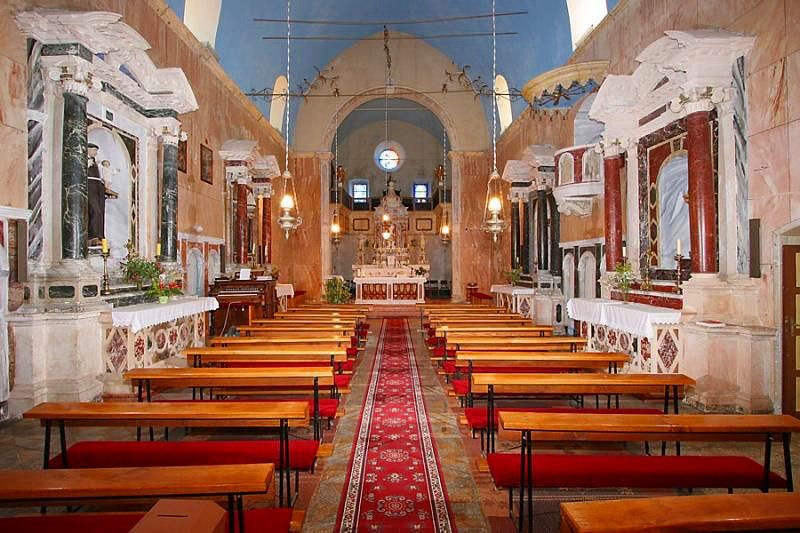
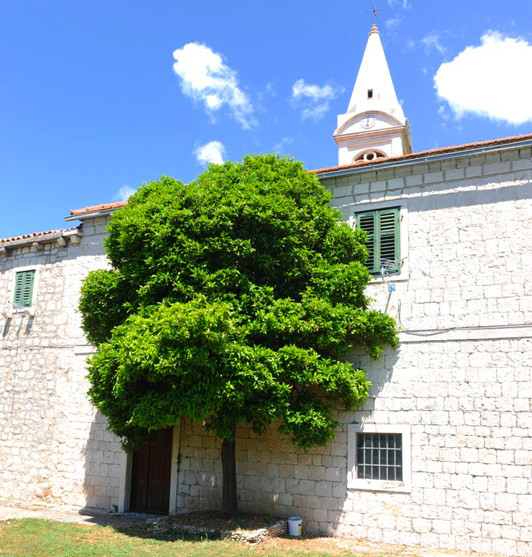
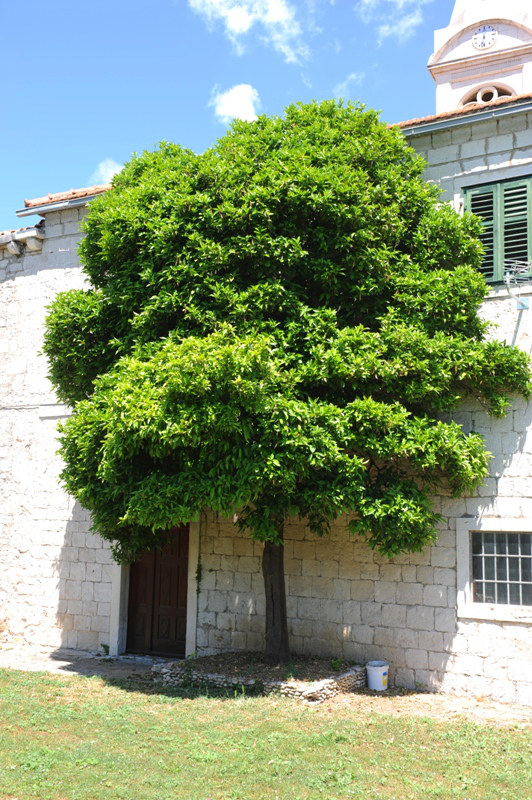
KircheChurch of the Assumption of the Virgin Mary (monastery church).
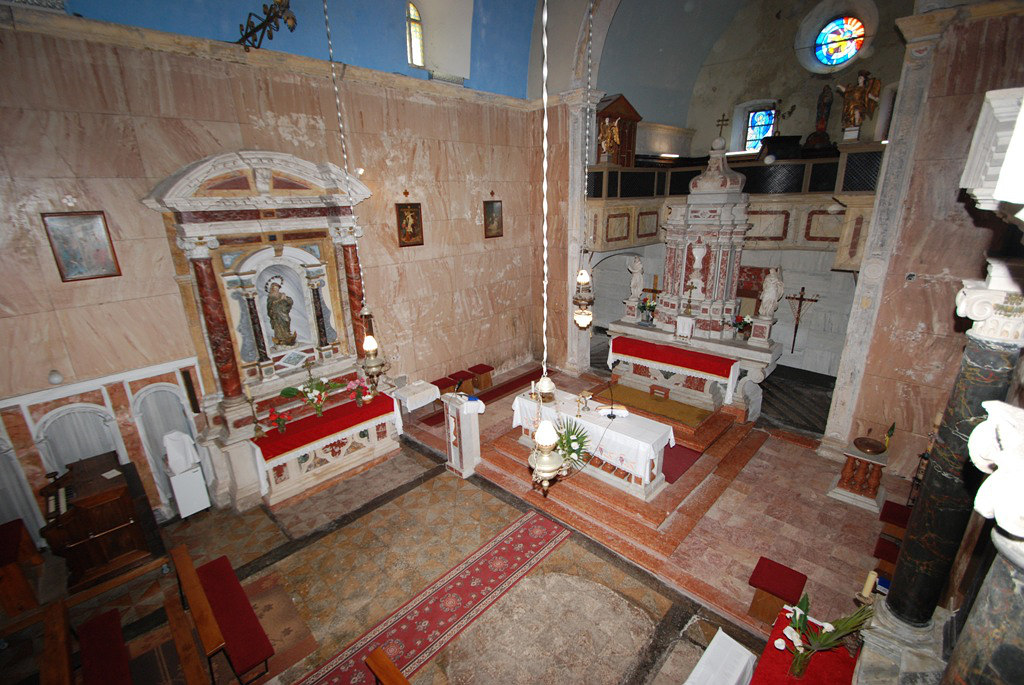
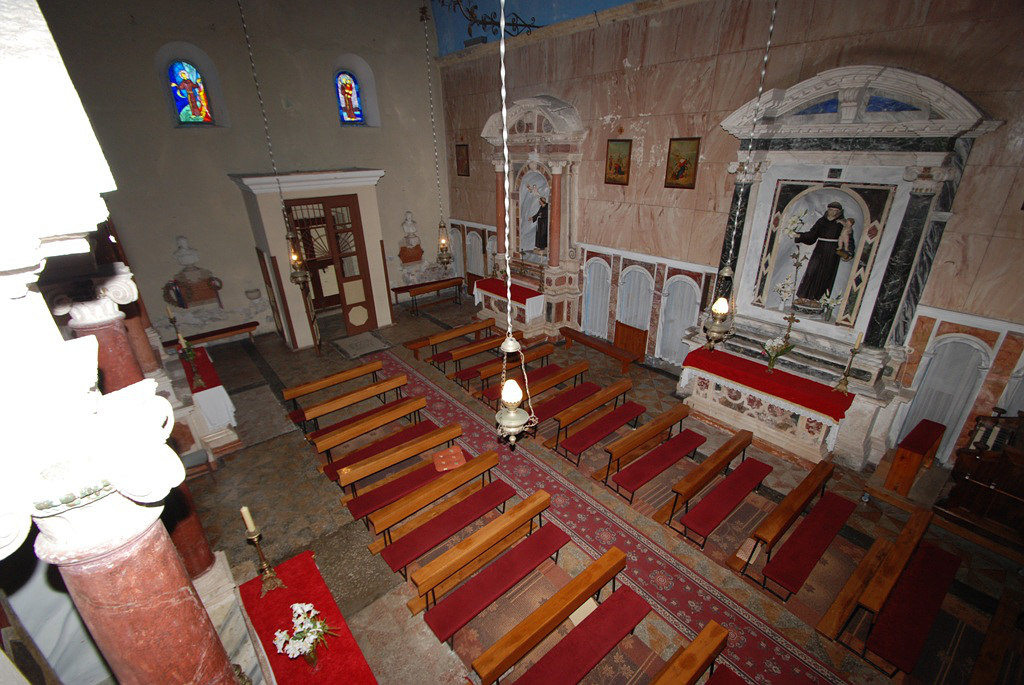
At the very beginning (in the 15th century) the Augustinians held services in the small church where the sacristy is today (behind the altar). During the Cyprus War (1570-1573) the church suffered severe damage, but was repaired as early as 1589, as evidenced by the Bosnian (Croatian Cyrillic) inscription on the threshold of the church gate. The church was also damaged during the Crete War (1645-1669), but was quickly repaired so that by 1672 it was a world-famous place of pilgrimage. In 1707 the construction of a new, large church began, which was completed in 1747 (according to the carved inscription on the front wall of the church, above the gate). Today's church is a single-nave, late Baroque building with a spacious apse that was added later.
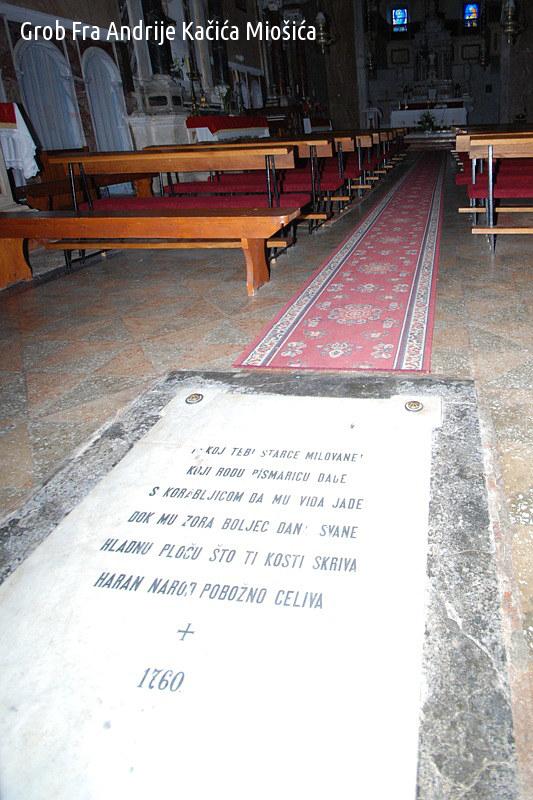
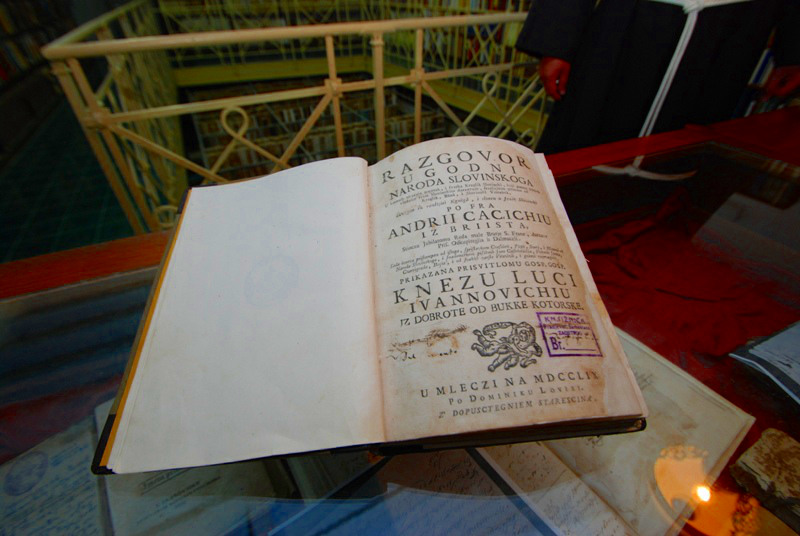
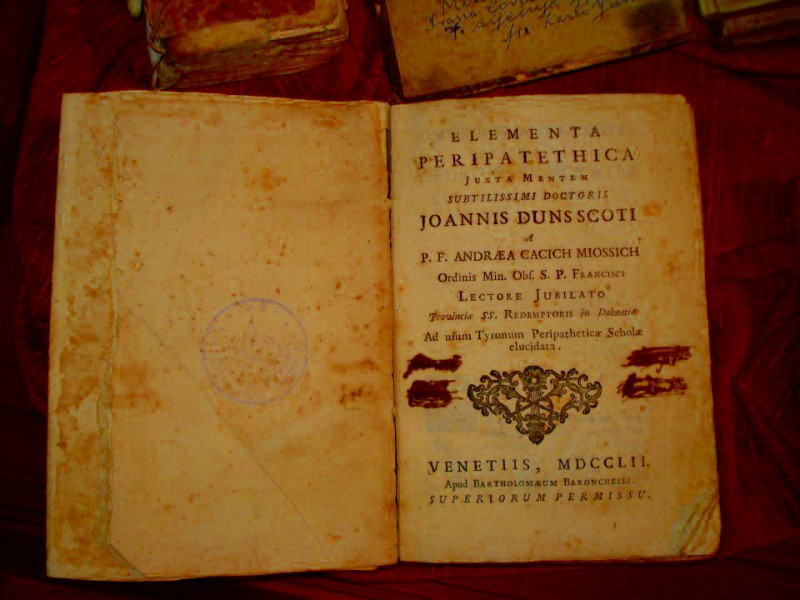
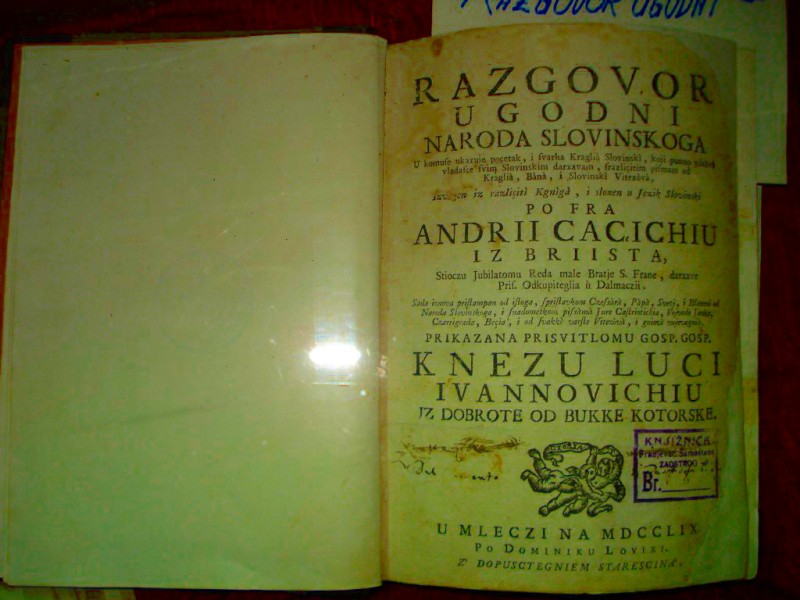
On the altar of Mary (the first altar to the left of the main altar) there is a statue of Mary of the Angels (1729, wood). At the entrance to the church is the tomb of Fr. Andrija Kacici Miosic (1704–1764), a folk poet from Brist, writers and philosophers. Among his most important works are the philosophical treatise "Elementa peripatheticae" , the chronicle entitled "Korabljica" (1760) and the bestseller of Croatian literature par excellence: "Razgovor ugodni naroda slovinskoga" ("Pleasant conversation of the Slavic people", 1756). To the left of the entrance gate is the bust of Fr. Andrija Kacici Miosic - a work by Ivan Rendic from 1889. To the right of the entrance gate is a bust of the poet Fr. Ivan Despot, a work by the same author. |
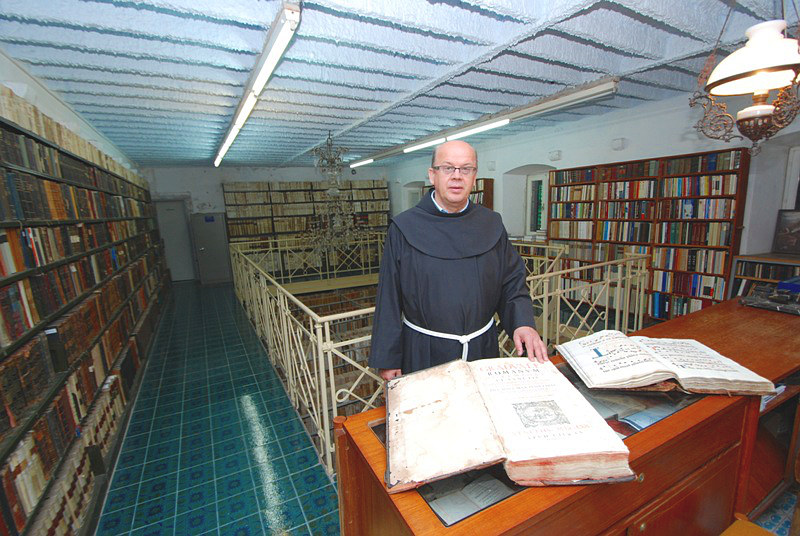
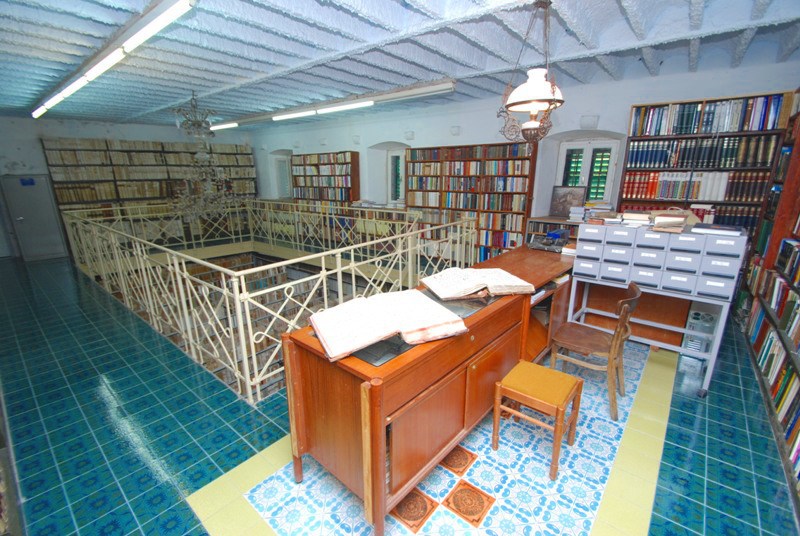
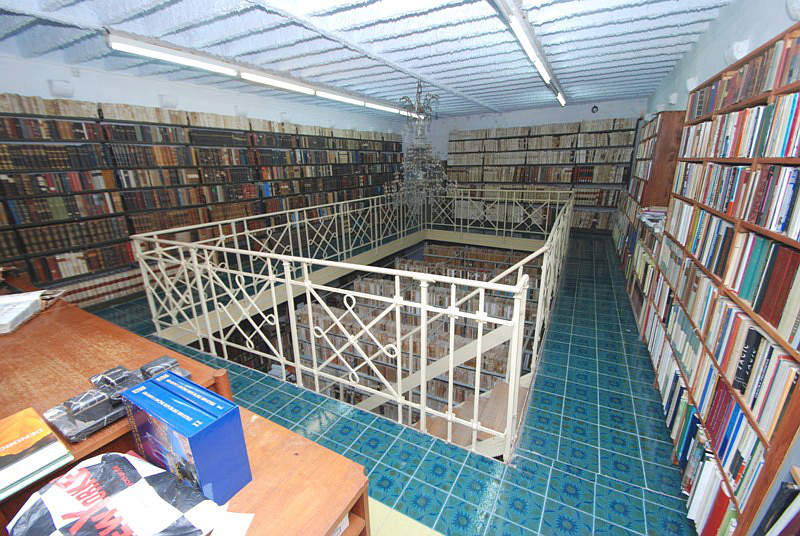
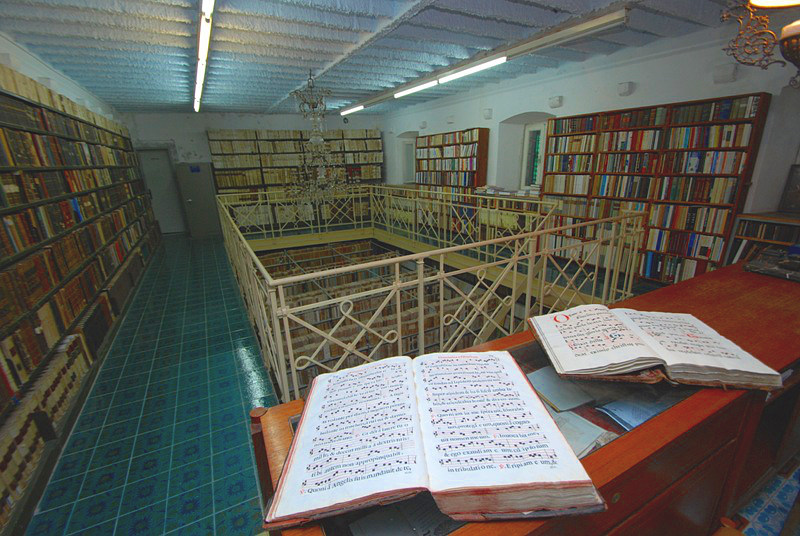
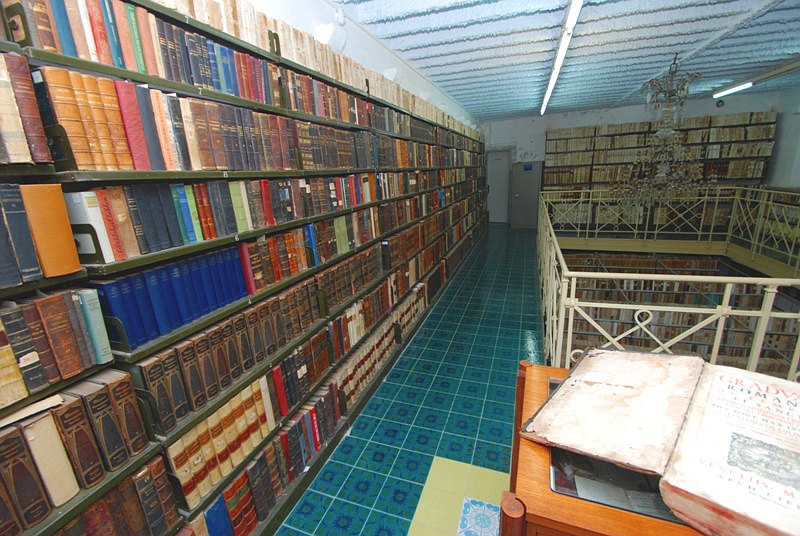
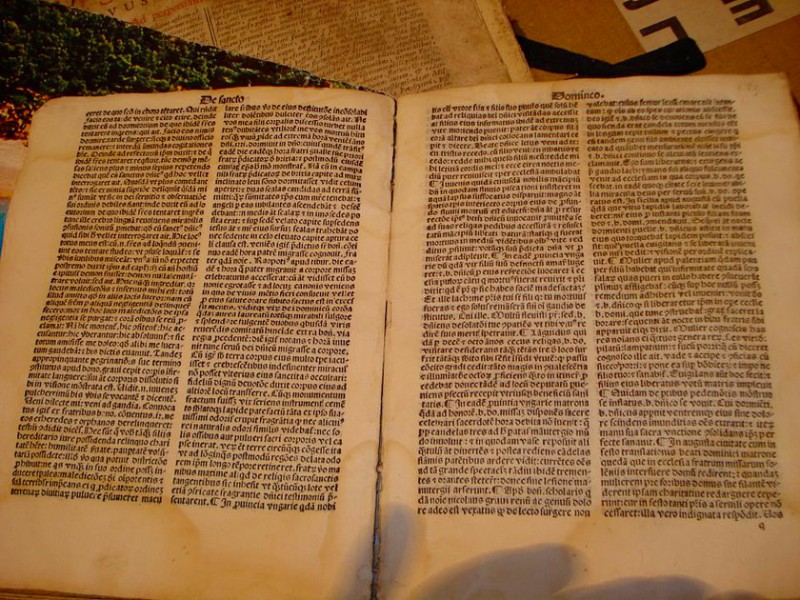
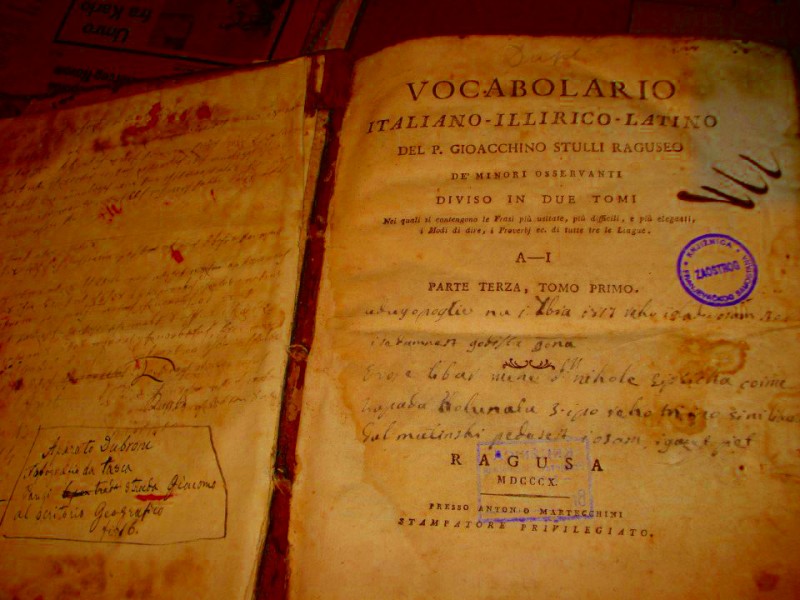
Unsere BibliothekThe book collection of the Zaostrog monastery still reflects the Franciscans' undeniable relationship with the written word, which has lasted for several hundred years. The library has
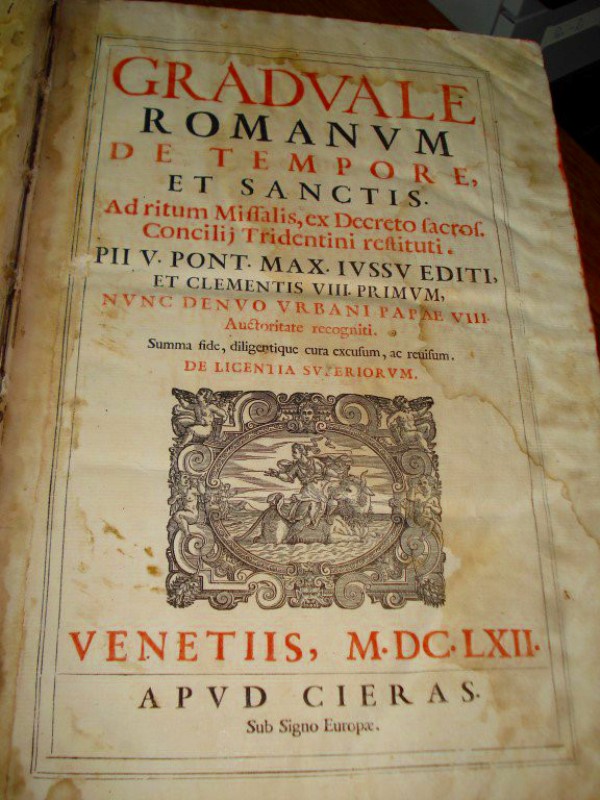
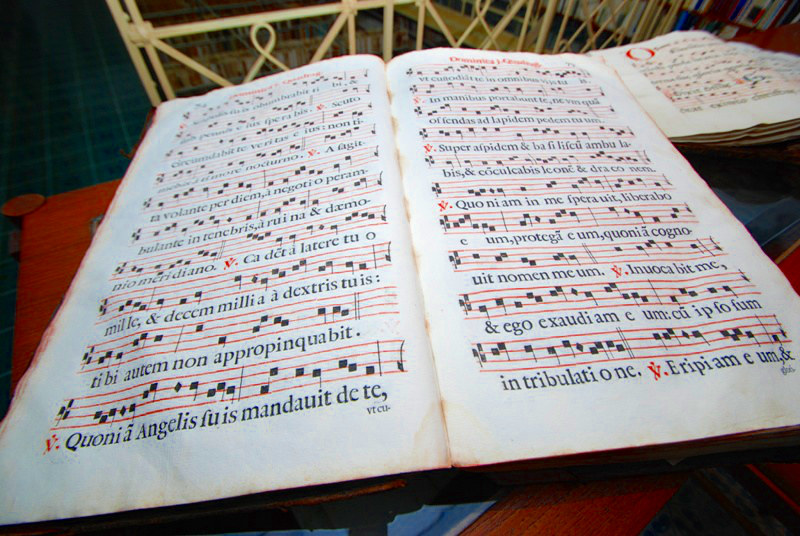
The books printed in the 17th and 18th centuries exceed the number of 5,000 and come from all disciplines: medicine, pharmacy, theology, philosophy, history, agriculture, literature, linguistics, natural sciences. Dictionaries are available in large numbers: from the oldest to the most modern.
The archive contains 457 Turkish documents, starting with the Turkish Judgment from 1494. Many of these books are of great importance - they are the historical roots of the educational activity of this monastery, because many international editions are kept in this library as well.
Valuable volumes include:
|
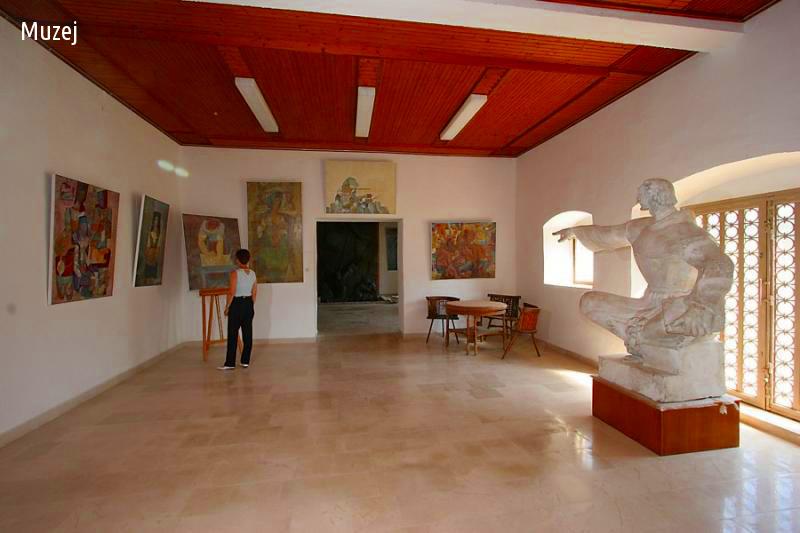
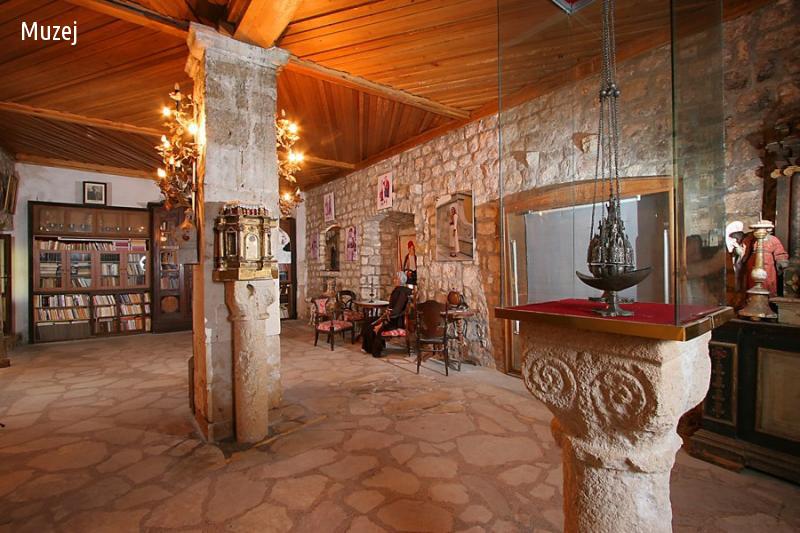
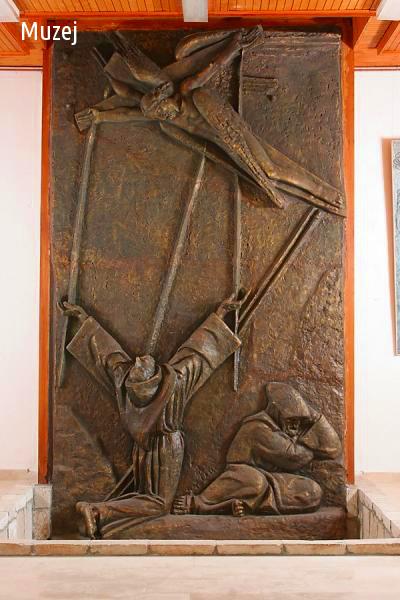
MuseumDear reader of these pages, here you can see only a small part of the rich ethnographic collection of the Franciscan monastery. It is not our intention to present the whole collection but to encourage you to visit the museum collection and the monastery.
The museum's collection consists of the ethnographic collection, the sacral collection, the library, the archive and the Mladen Veza Gallery. The ethnographic collection includes a large number of folk costumes from almost all parts of Croatia, jewelry and various objects, hand tools, old furnishings...
The sacred collection includes paintings, sculptures, vestments, church furniture and other objects. Most of the exhibits are made of silver. The robe of the Bosnian king Stjepan Tomas (1444 - 1461) is definitely one of the more valuable exhibits.
Museum opening hours : 7:00 p.m. - 9:00 p.m |
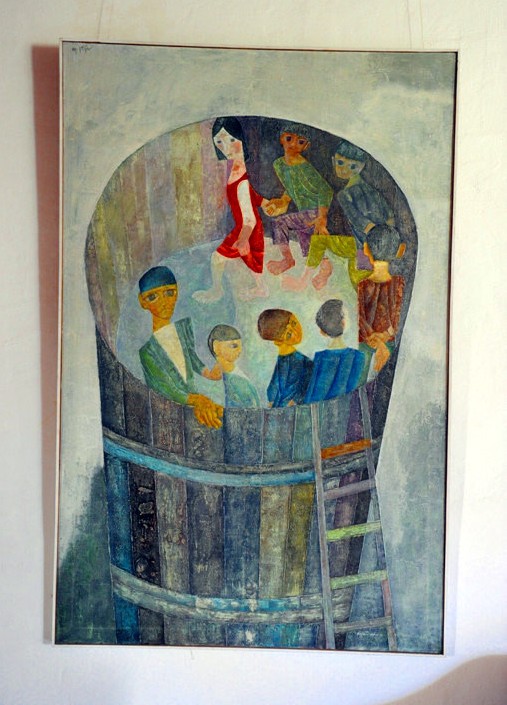
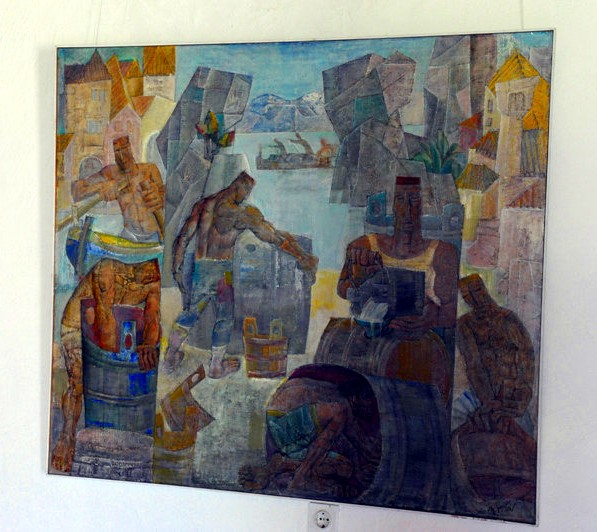
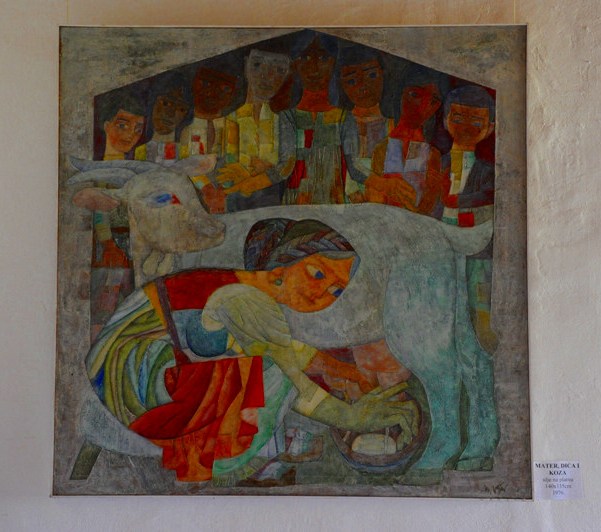
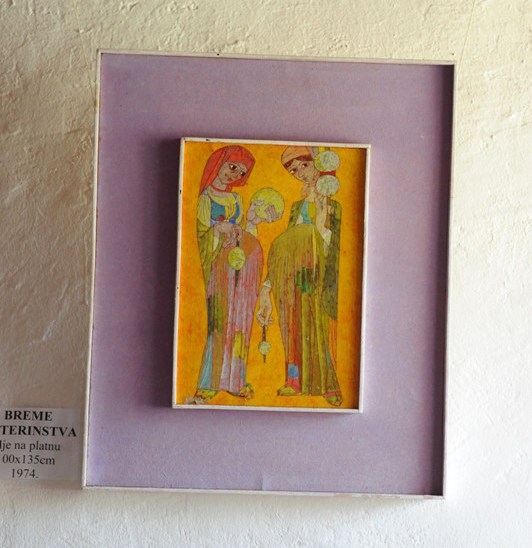
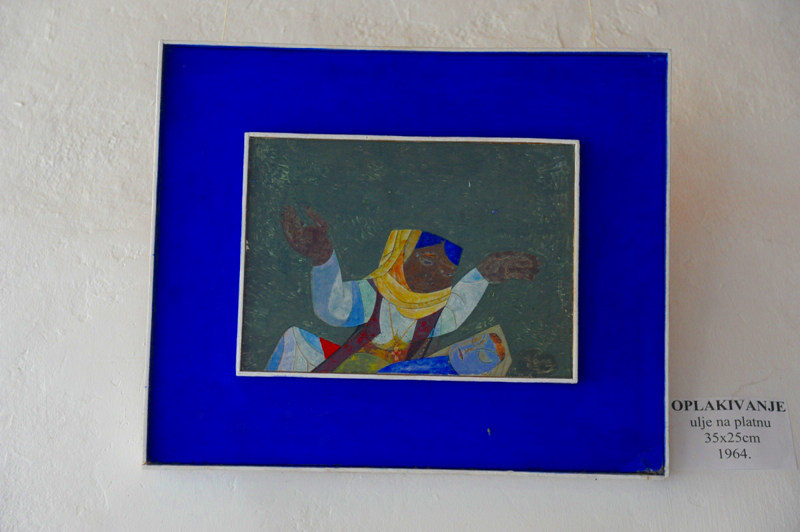
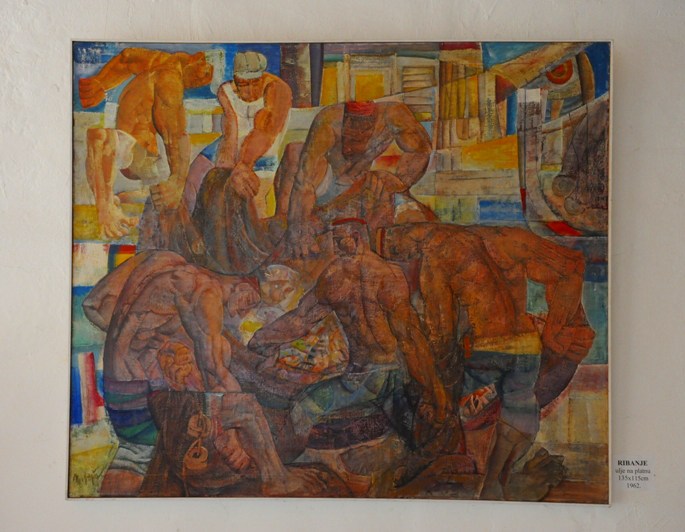
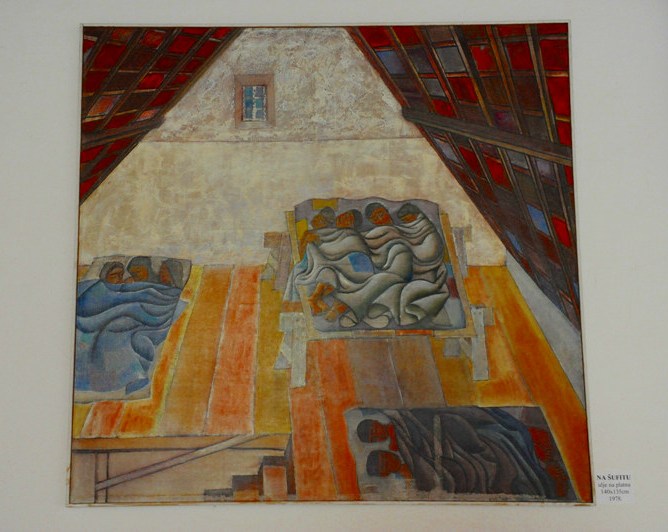
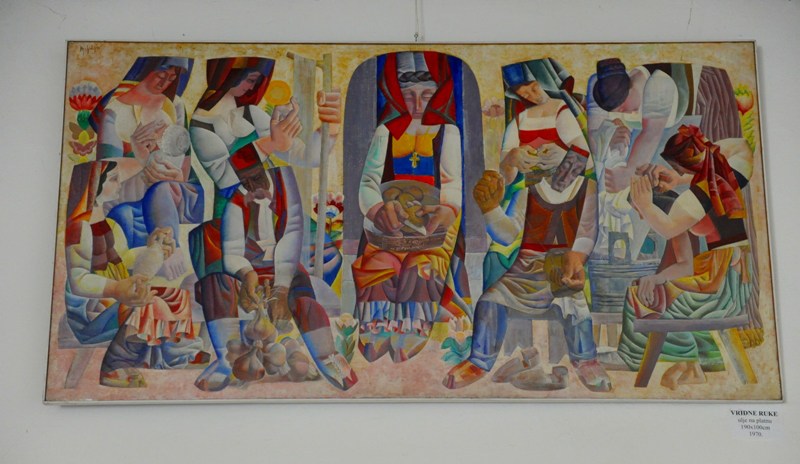
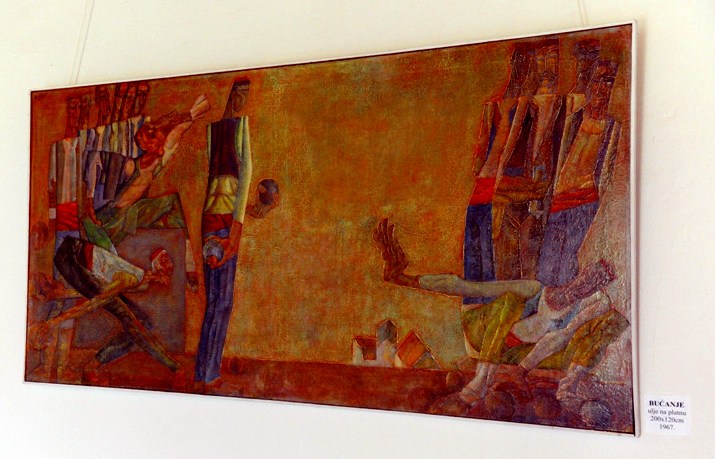
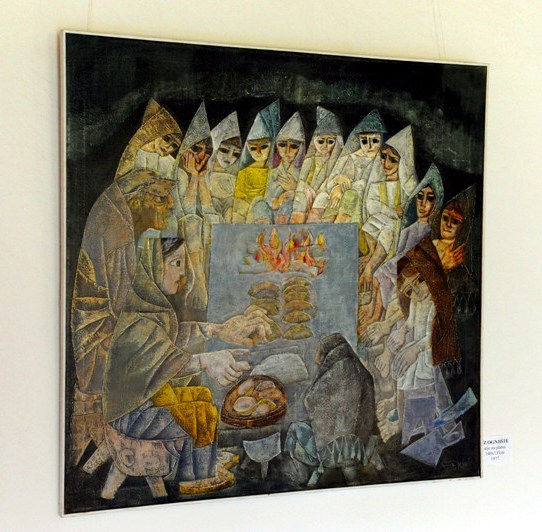
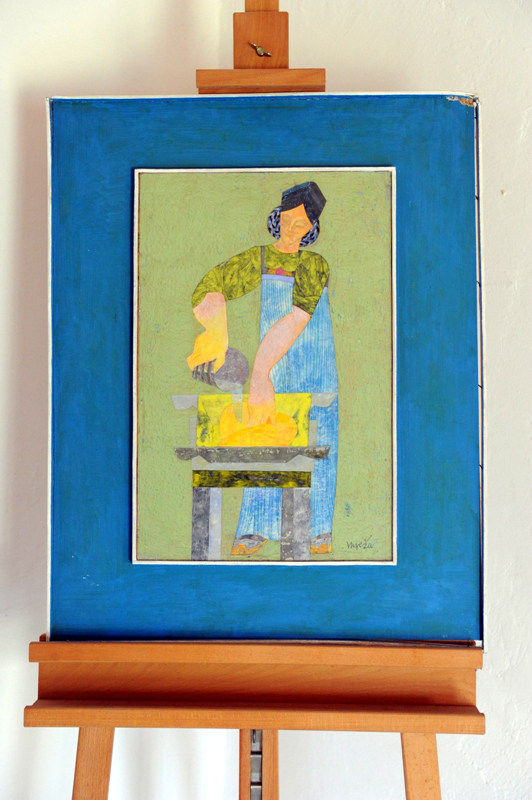
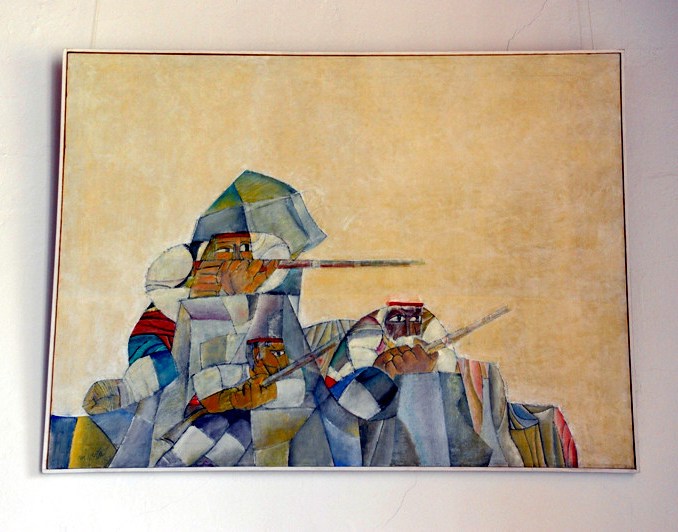
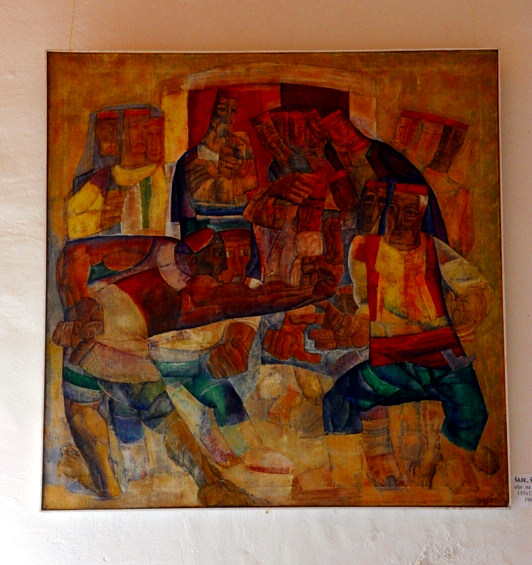
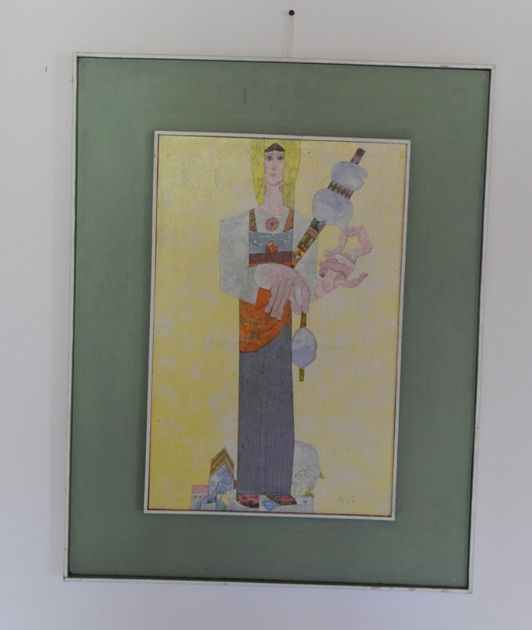
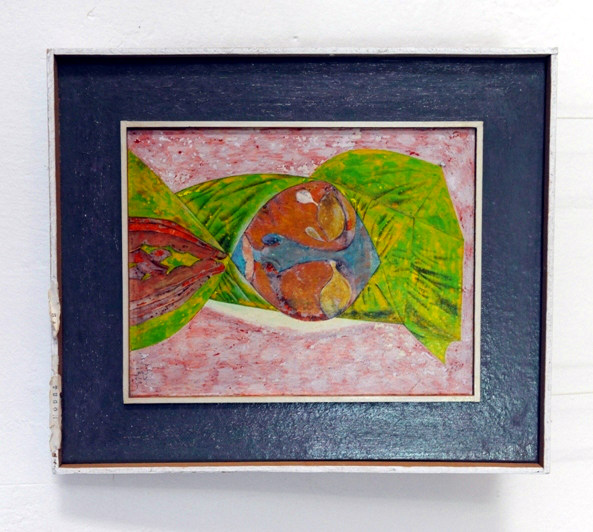
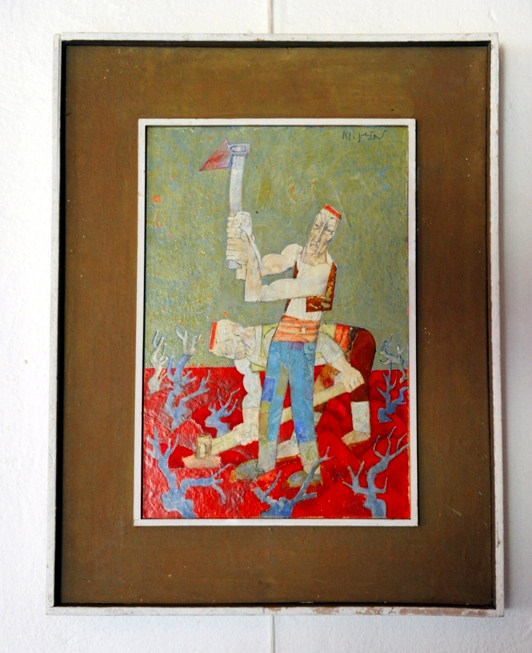
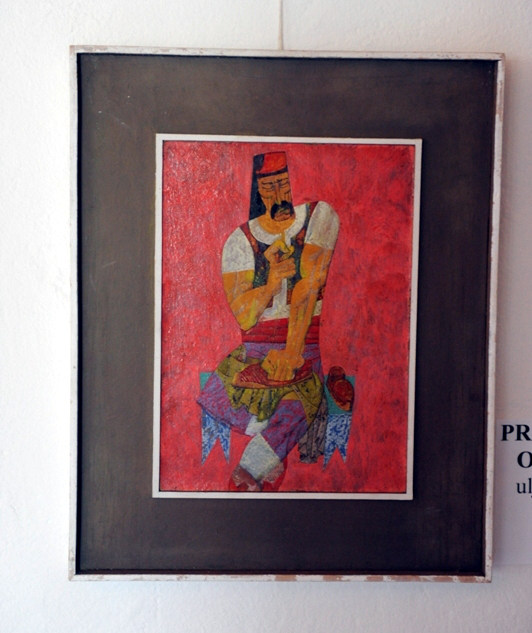
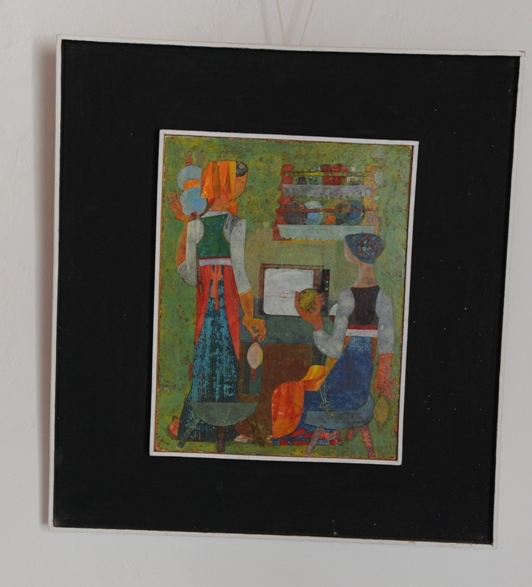
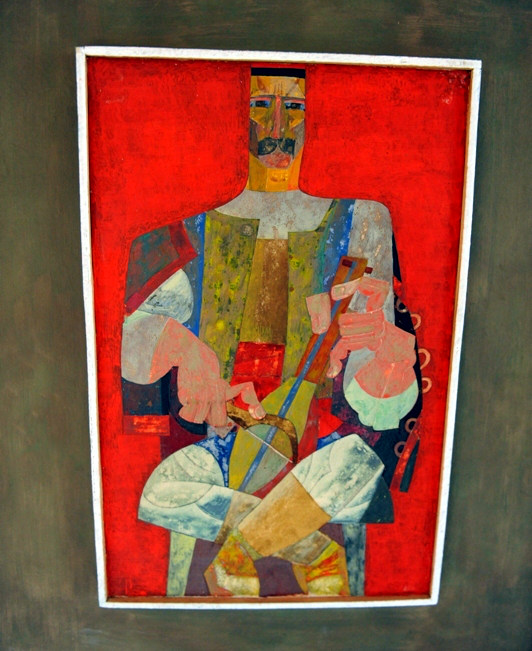
Galerie Mladen VezaWe are especially thankful to Mladen Veza for his great gift, the memorial collection of paintings “ Childhood Imprints ”, housed in the premises of the Zaostrog monastery. The Mladen Veza Gallery was opened on August 12, 1989.
In memory of the artist and patron of the Zaostrog monastery (Mladen Veza, 7.2.1916 - 18.2.2010)
1. Some information about the life of the artist
The academic painter and full professor at the Academy of Fine Arts of the University of Zagreb died on February 18, 2010 at his home in Zagreb and was buried on February 24 in Zagreb's Mirogoj Cemetery. When he was 12, Mladen left his birthplace Brist and moved to Zagreb, where he stayed until the end of his life. However, he always returned to Brist, to his roots. From Brist he took with him his Christian faith, to which he always remained true, as well as the inspiration he drew from Old Man Milovan's "Hymnbook", as he often emphasized, but also his great love for the fatherland Croatia. That was his "tripod" on which he found a firm footing. He has had 68 independent exhibitions at home and abroad and has been involved in over 200 group exhibitions, from Toronto and New York to Vienna and Beirut. He illustrated over 500 books and magazines. Several catalogs have been published from his exhibitions, and in , the large and representative monograph Mladen Veza was published by the Skolska knjiga publishing house. Two documentaries were made about Mladen Veza (1970 and 1984).
At this point, a few words about his collaboration with several church institutions, especially with our province.
2. Works of general importance
1966 - At the request of Cardinal Franjo Seper he created the portrait of Dr. Ivan Merz, who was beatified by Pope Paul II in Banja Luka in 2003. The painting, 100x90 cm, oil on canvas, is kept in the house of Christ the King's servants in Zagreb. 1970 – plaque for the canonization of St. Nikola Taveli?. The silver plaque was given to Pope Paul VI. given as a gift; some deserving people received the bronze plaque. 1993 - Biblical Stories and Legends. Excerpt from Croatian spiritual poetry edited by Nasa djeca, Zagreb, p. 48 (17 poets, 45 illustrations). 1997 - The Easter edition of the weekly "Glasa koncila" ("Voice of the Council") was decorated with M. Veza's picture "Resurrection", the original is in his gallery in Pittsburgh (USA). 2000 – member of the initiative committee of the Croatian Academy of Sciences and Arts (HAZU) to commemorate the 300th anniversary of the birth of Fr. Andrija Kacic Miosic (1704-2004), whom he held in high esteem.
3. Cooperation with religious brothers Academic painter Mladen Veza was also a great patron of the “Ka?i? Monastery” in Zaostrog.
1969 - Veza designed and forged the jubilee bronze medal of the monastery in Zaostrog for the monastery anniversary (1469-1969). 1989 – He donated his collection of paintings “Imprints of Childhood” to the monastery in Zaostrog, which is housed in the “Gallery Mladen Veza”, which was ceremoniously opened on August 12, 1989. Today, 27 paintings are exhibited in the gallery; on August 26, 2005, 14 paintings were stolen that have not been located to this day.
|
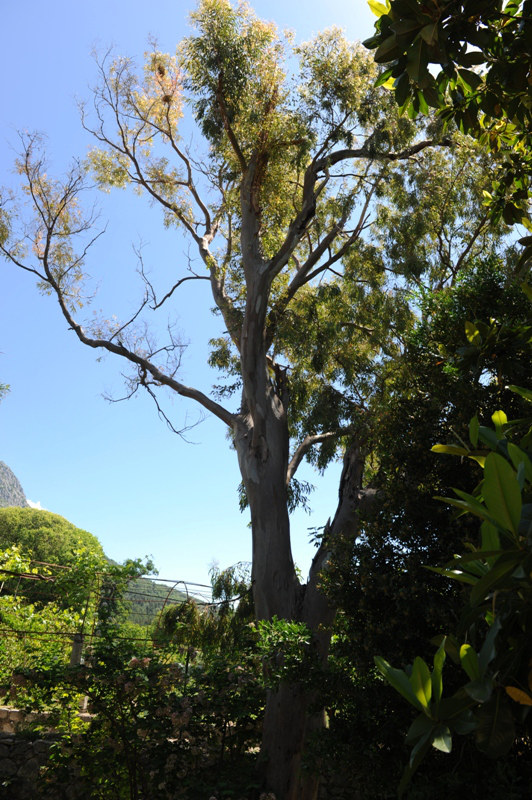
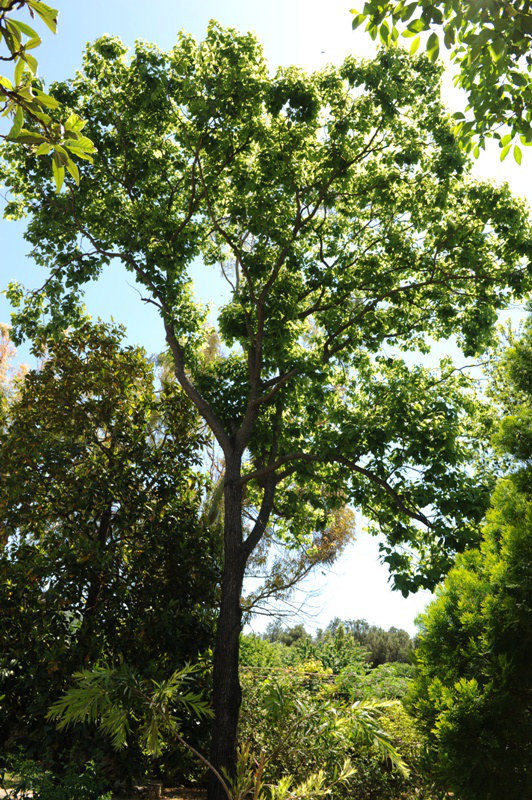
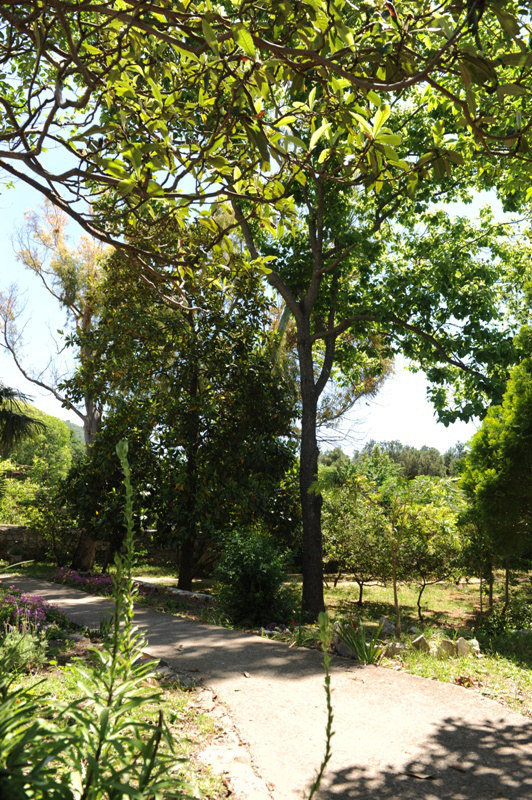
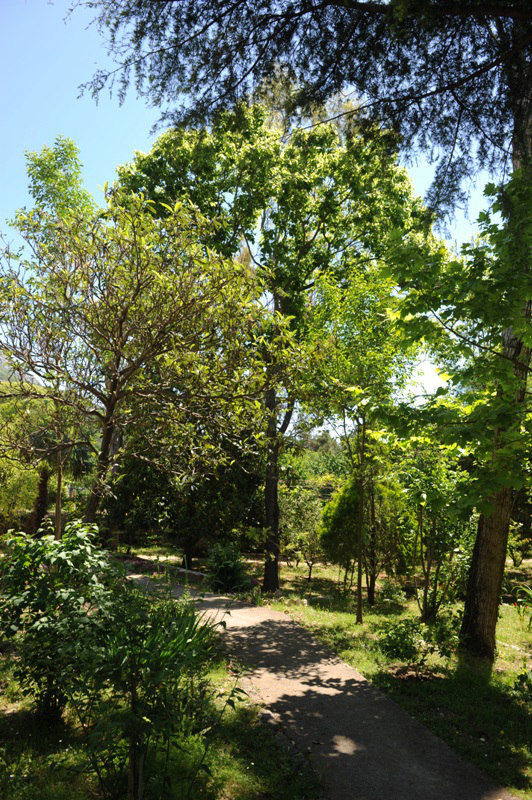
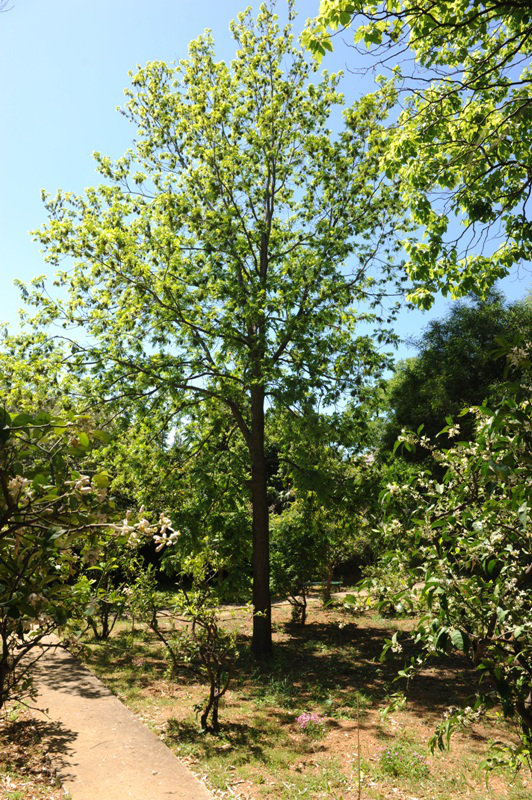
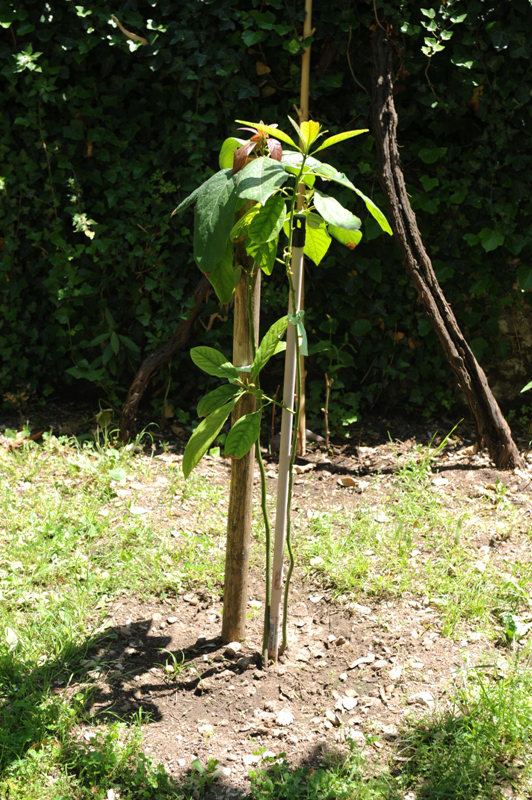
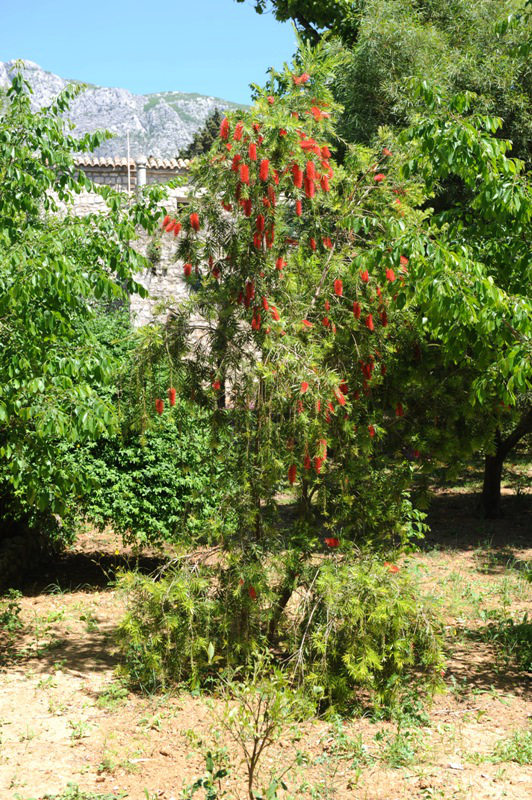
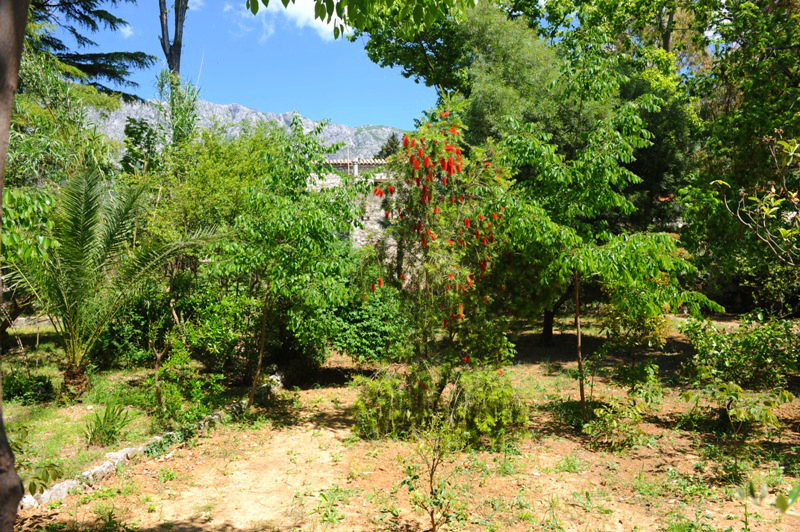
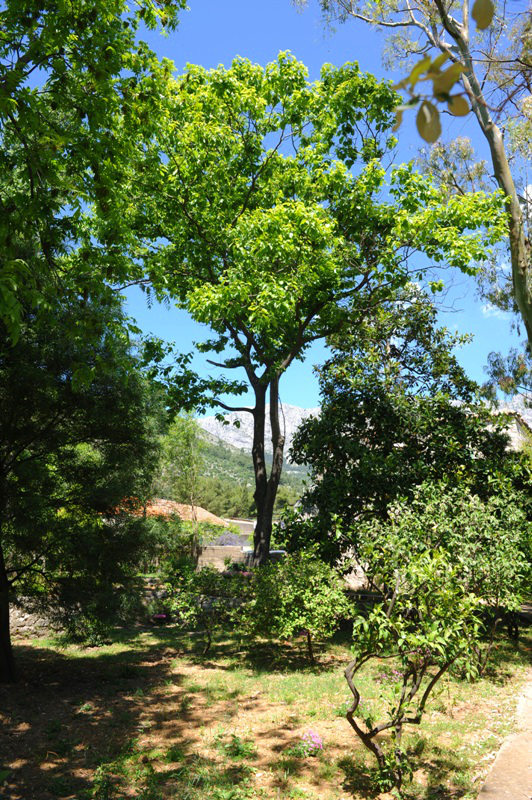
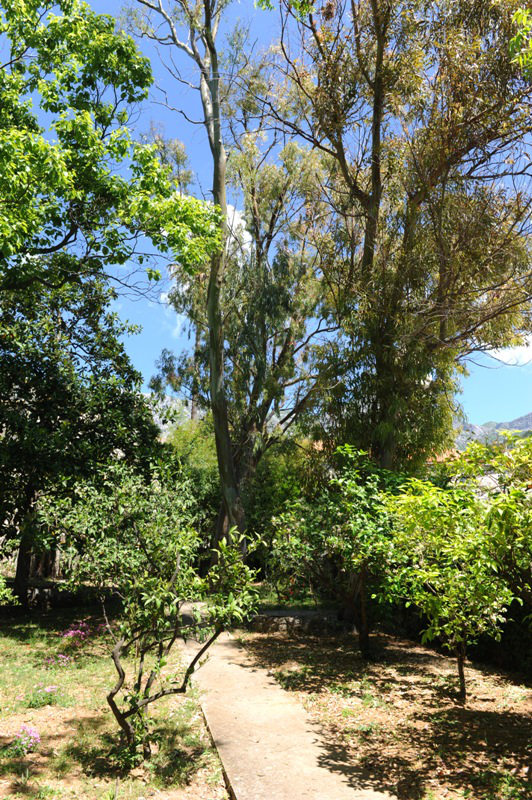
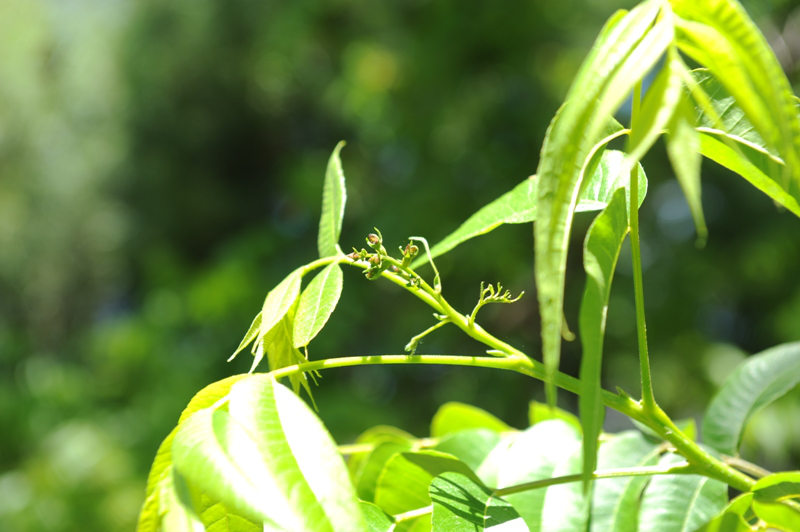
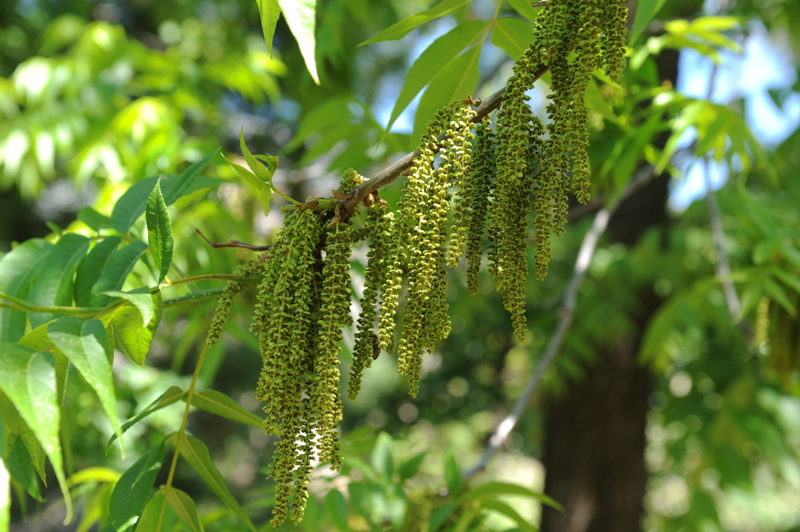
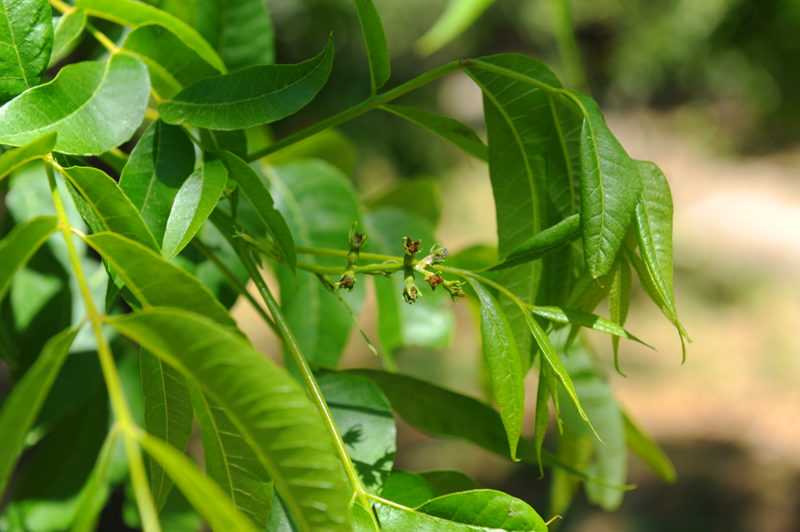
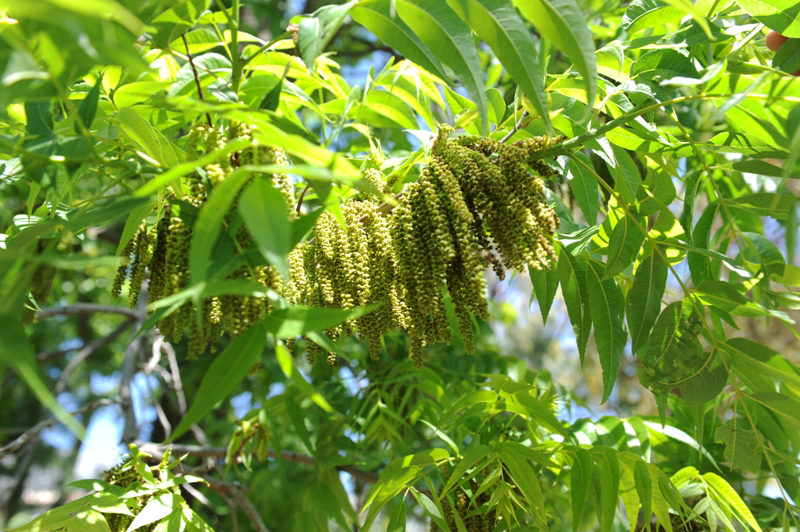
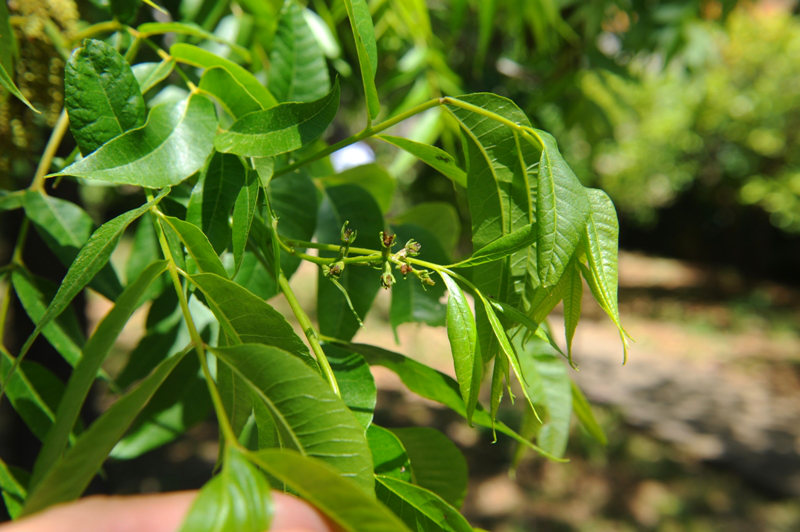
Botanischer GartenIn the southwestern part of the monastery garden, on a separately fenced area of about 2000 m2 , a botanical garden was created in 1968, which today has 250 different plants; the seven species of mimosa, five species of palm and maple trees, four species of eucalyptus, a raisin tree from China, the Chinese currant and others deserve special mention. |
Franjevacki samostan Zaostrog |
|
|
tel: +385-21-629-200, tel: +385-21-629-330 |
||
| Zuhause | Aktuell | Liturgie | Angebot | Unterkunft | F�hrung | Namhafte Pers�nlichkeiten | Ort | Landkarte | Kontakt |